






Between fine particles, volatile organic compounds (VOCs), and fumes from certain materials, the topic of 3D printer toxicity deserves a serious, factual approach without excessive dramatization. As is often the case in digital manufacturing, it is largely a question of usage context, materials, and good practices.
This article reviews the nature of emissions in 3D printing, the most concerned materials, and practical solutions to effectively reduce risks across all types of technologies.
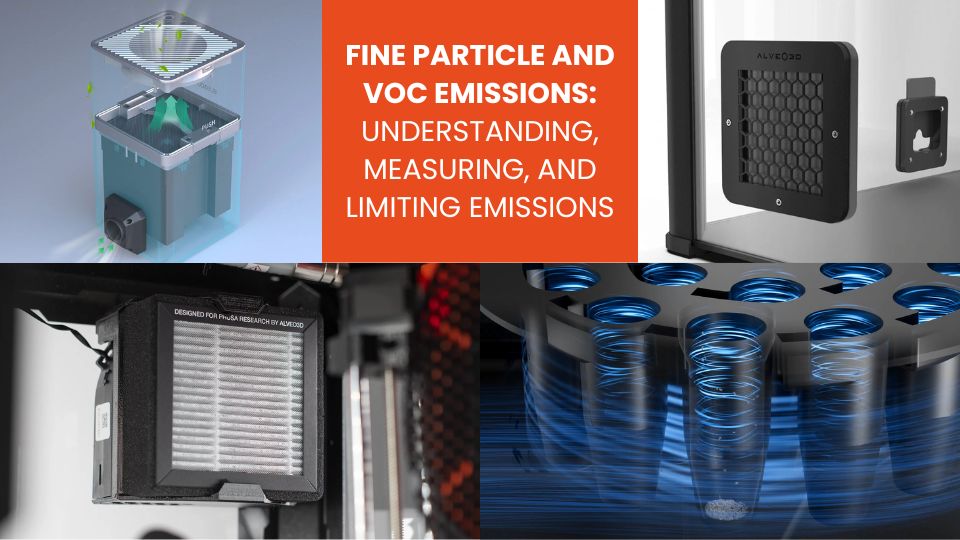
Fine particles, VOCs, fumes: what are we really talking about?
When discussing particle emissions, several distinct phenomena are often confused. However, they have different origins and impacts.
Fine and ultrafine particles
Fine particles are tiny solid or liquid fragments suspended in the air. In additive manufacturing, we mostly refer to ultrafine particles, invisible to the naked eye, generated during the heating and extrusion of polymers.
These particles are mainly emitted when the material passes through the high-temperature nozzle. The higher the temperature, the greater the amount of particles produced. Their extremely small size allows them to remain suspended in ambient air for a long time.
Volatile organic compounds (VOCs)
VOCs are chemical substances that easily evaporate at room temperature. In 3D printing, they originate from the thermal degradation of certain plastics.
Unlike fine particles, VOCs are gaseous. They are responsible for the characteristic odors noticed when using certain materials.
Not all materials emit the same VOCs, and certainly not in the same proportions.
Visible fumes
In some cases, especially with excessive temperatures, loaded materials, or incorrect settings, light fumes may be observed. These usually correspond to a high concentration of particles and gaseous compounds.
Actual toxicity levels of materials
Standard materials: limited risk in ventilated environments
In a properly ventilated room, the most common materials used in additive manufacturing present a low level of risk for standard use.
The most widespread polymers, such as PLA, when printed under proper thermal conditions, generally do not pose significant problems in a well-aired environment. Studies show that concentrations remain well below concerning thresholds as long as air is renewed.
It is often the lack of ventilation, combined with long and repeated sessions, that turns a harmless situation into chronic exposure.
Materials requiring more careful monitoring
Some materials require extra precautions due to their chemical composition or higher extrusion temperatures.
- ABS and ASA: these technical polymers emit more VOCs, notably styrene. Using them without containment or filtration is not recommended in enclosed spaces.
- Technical Nylons: polyamides, especially reinforced ones, require high temperatures that favor the emission of ultrafine particles.
- Composite filaments: fiber-loaded materials (carbon, glass, metals) justify effective filtration for regular use.
It is important to emphasize that the danger does not come solely from the material, but also from usage frequency, exposure duration, and room volume.
Effectively reducing emissions: practical and accessible solutions
Create a dedicated and well-ventilated area
The first barrier remains the simplest: the environment.
Installing a machine in a dedicated, properly ventilated room already drastically reduces exposure. Regular natural or mechanical ventilation is often sufficient to maintain very low concentrations.
In professional or educational environments, this approach is almost always recommended before any more technical solution.
Filtration systems: an effective and measurable solution
Integrated printer filtration
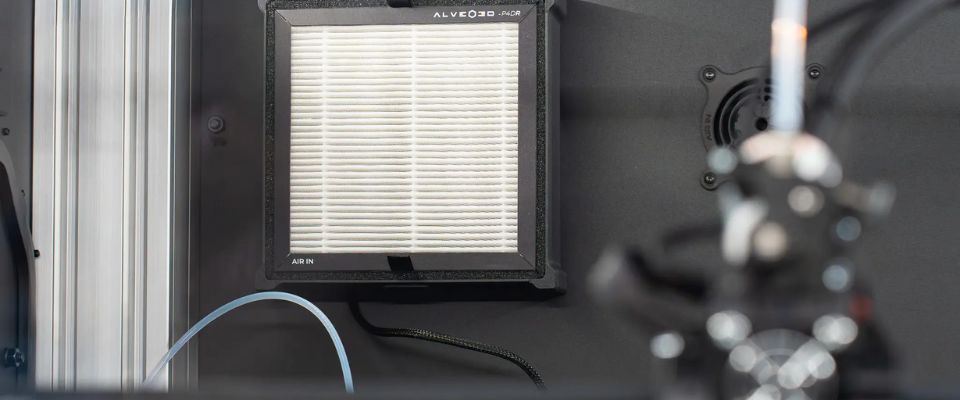
More and more machines include modules combining HEPA and activated carbon filters. These solutions provide a significant reduction of ultrafine particles and VOCs, provided the enclosure’s airtightness is properly controlled.
Enclosures and dedicated filtration solutions
External containment and filtration solutions currently represent the most comprehensive approach. They capture emissions directly at the source, before they disperse into the room.
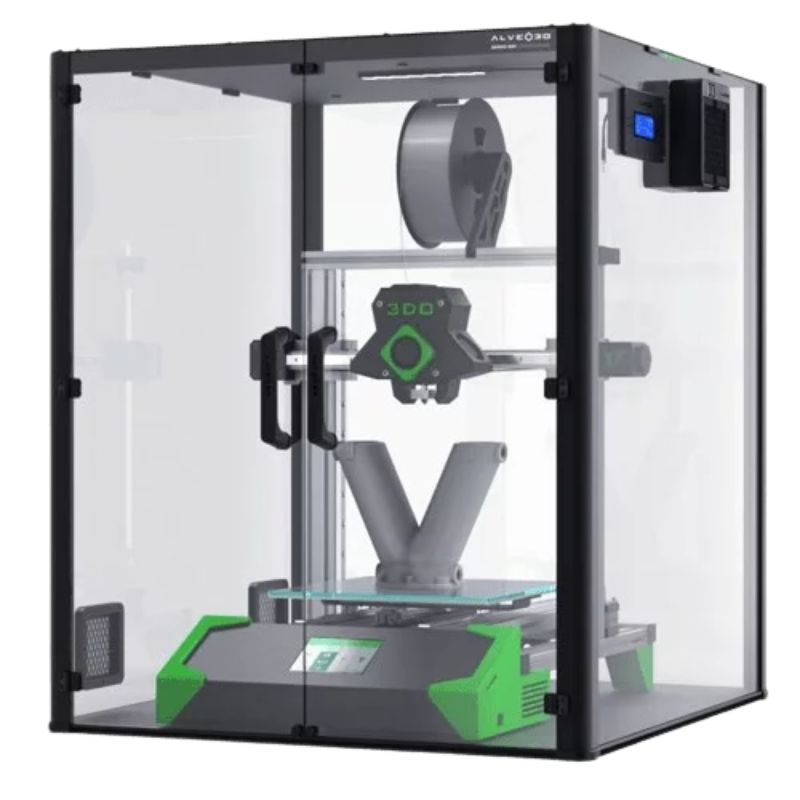
Some solutions developed by Alveo3D, such as PrinterCase enclosures or standalone filtration systems, rely on scientific studies to optimize the capture of fine particles and gases.
PrinterCase Alveo3D
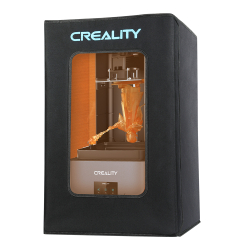
The PrinterCase developed by Alveo3D is a closed enclosure integrating a filtration solution dedicated to emissions from filaments. By confining the machine within a controlled volume, it helps limit the dispersion of ultrafine particles and gaseous compounds into the surrounding air.
This type of solution is particularly relevant for environments where printing is frequent, technical materials are commonly used, or when natural ventilation of the room is insufficient.
Resin use: different, but manageable risks
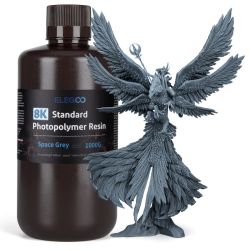
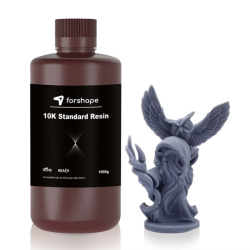
Unlike FDM, resin technology does not rely on thermal melting of a solid polymer. Emissions are therefore different, but not absent.
What really poses a problem
Liquid photopolymer resins can be irritating on direct contact and release vapors during printing and post-processing. These vapors are not necessarily dangerous at low doses, but repeated exposure without protection can cause discomfort and sensitization.
Cleaning parts and handling unpolymerized resin are the most sensitive phases.
Essential good practices
- Use a closed machine or a suitable enclosure
- Ensure effective ventilation
- Use filtration systems dedicated to resin vapors
- Wear gloves/masks during handling
Compact filtration solutions allow effective capture of emissions without turning the workshop into a laboratory.
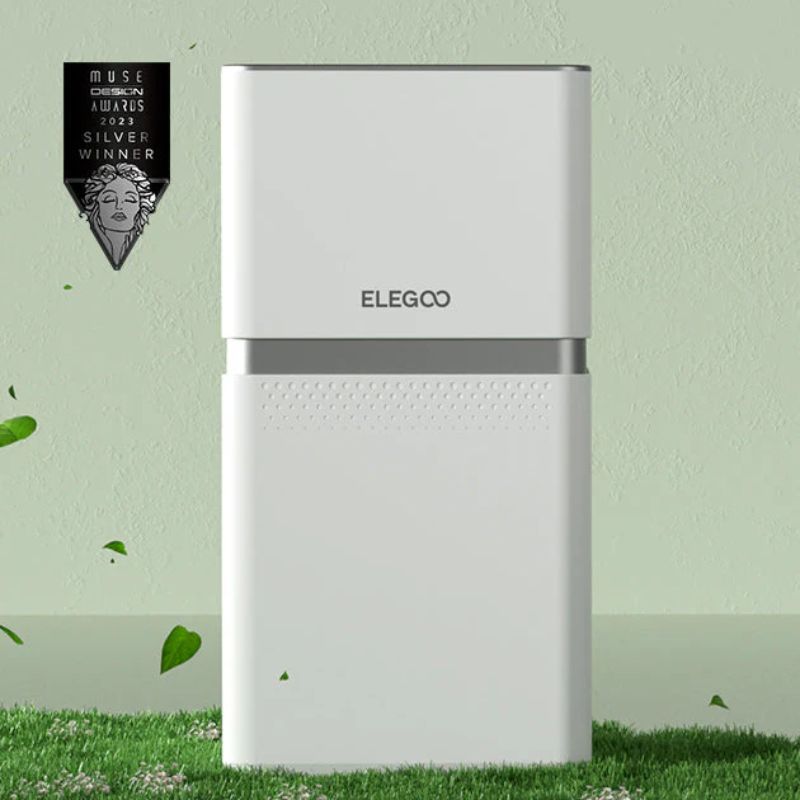
Elegoo Mars Mate
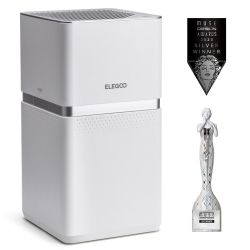
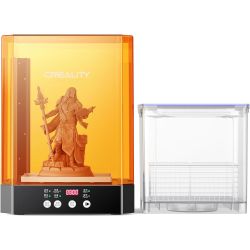
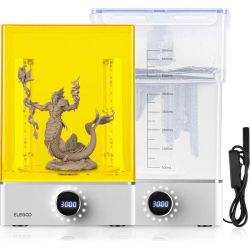
The Elegoo Mars Mate is a filtration module designed to limit the dispersion of vapors and odors generated during resin use.
Installed in close proximity to the machine, it acts directly on the air extracted from the chamber, combining particulate filtration and adsorption of volatile compounds, allowing a significant portion of emissions from photopolymer resins to be captured.
Laser cutting and engraving: another type of emissions not to be overlooked
Laser engravers generate a completely different type of pollution, often more visible.
Why laser engraving emits more
Combustion or pyrolysis of materials releases a large amount of smoke, particles, and gases. These emissions strongly depend on the material worked on and the power used.
Some materials produce irritating or even toxic fumes if not properly filtered.
Filtration and extraction: a necessity rather than an option
In the case of lasers, filtration is not a comfort, but a necessity.
High-performance filtration systems with multiple stages efficiently treat smoke, odors, and particles, making indoor use safer and more comfortable.
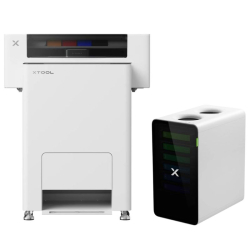
The SafetyPro AP2 and AP2 Max filter smoke, particles, and gases produced by laser engraving and cutting. The more powerful AP2 Max is suitable for intensive use, while the AP2 fits smaller volumes. These systems improve indoor air quality in addition to ventilation and careful material selection.
Conclusion: a reasoned and responsible approach to digital manufacturing
Digital manufacturing as a whole is neither harmless nor inherently dangerous. Like any technology, it requires understanding the phenomena involved and adopting appropriate good practices.
Fine particles, VOCs, and fumes should not be ignored, but they can be effectively controlled through proper ventilation, carefully chosen materials, and proven containment and filtration systems.
Rather than succumbing to fear or negligence, the healthiest approach remains a balance between performance, safety, and user comfort. Only in this way will additive manufacturing continue to integrate sustainably into workshops, schools, and professional environments.
✅ Why Choose Polyfab3D?
Premium Support and After-Sales Service: Starting from your needs, we will guide you to the most suitable solution and provide long-term support for its implementation and daily use.
Official Reseller: Polyfab3D is a certified reseller of top brands, ensuring you get official products, exclusive access to the latest innovations, and priority technical support.
Fast Delivery and Customer Satisfaction: Polyfab3D is committed to providing you with an optimal and fast experience. Positive feedback from our customers rewards us and proves the reliability and efficiency of our service.
Contact us now for a personalized recommendation tailored to your needs, budget, and ambitions.